PRP and PRF under the eyes: how long it lasts, and what PRF gel adds
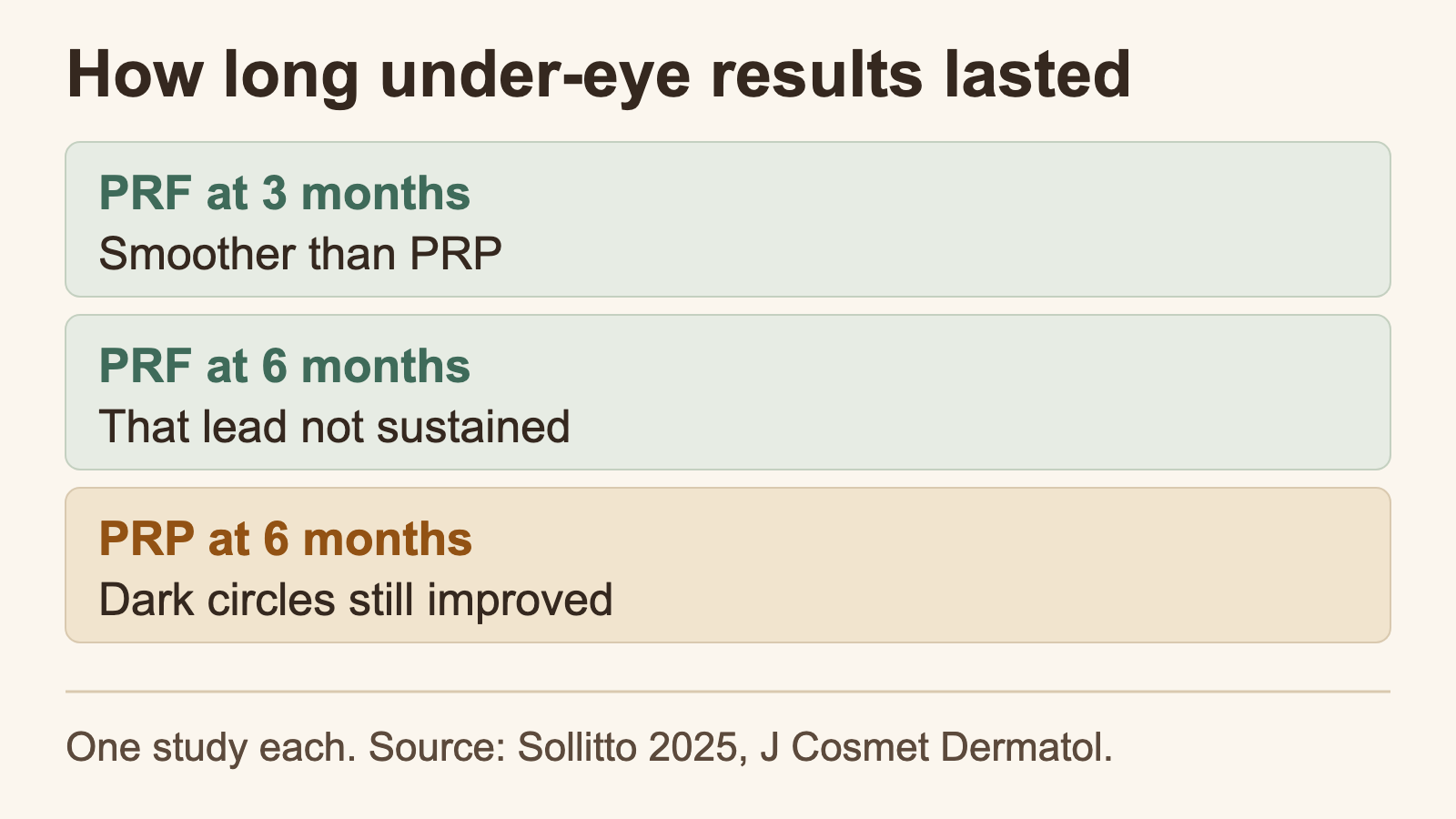
Under the eyes, PRP has the stronger evidence for dark pigment, PRF studies have mainly examined texture and fine lines, and a 2025 systematic review of 14 studies found neither superior. In the one direct comparison, PRF showed better skin smoothness beside the eyes at three months; that advantage was not sustained at six months. In a PRP study, dark circles were still improved six months after treatment.[1]
Seoul PRP editors write these chapters. Editorially updated: .
In this chapter
What causes the under-eye look PRP and PRF are used for?
Hollowing and darkness under the eyes come from several sources at once: volume loss, extra pigment, visible blood vessels and loose skin. A 2026 systematic review of 50 under-eye studies matched treatments to those causes. Fillers remain the foundation for volume loss, lasers address melanin, vessels and laxity, microneedling and polynucleotides target texture and fine lines, and surgery is preferred for bulging fat pads or a weak lower eyelid. PRP and PRF formed a category of their own.[2]
What did the under-eye studies of PRP and PRF find?
A 2025 systematic review found 14 studies of PRP or PRF injected around the eyes: ten of PRP and five of PRF, one of them testing both. Nine of the PRP studies measured dark pigment, and their quantitative measures consistently showed less melanin or pigment; in one, the melanin area fell by 46.6% on average. Among the PRF studies, two found significantly fewer wrinkles, two found denser under-eye skin and one found less pigment.[1]
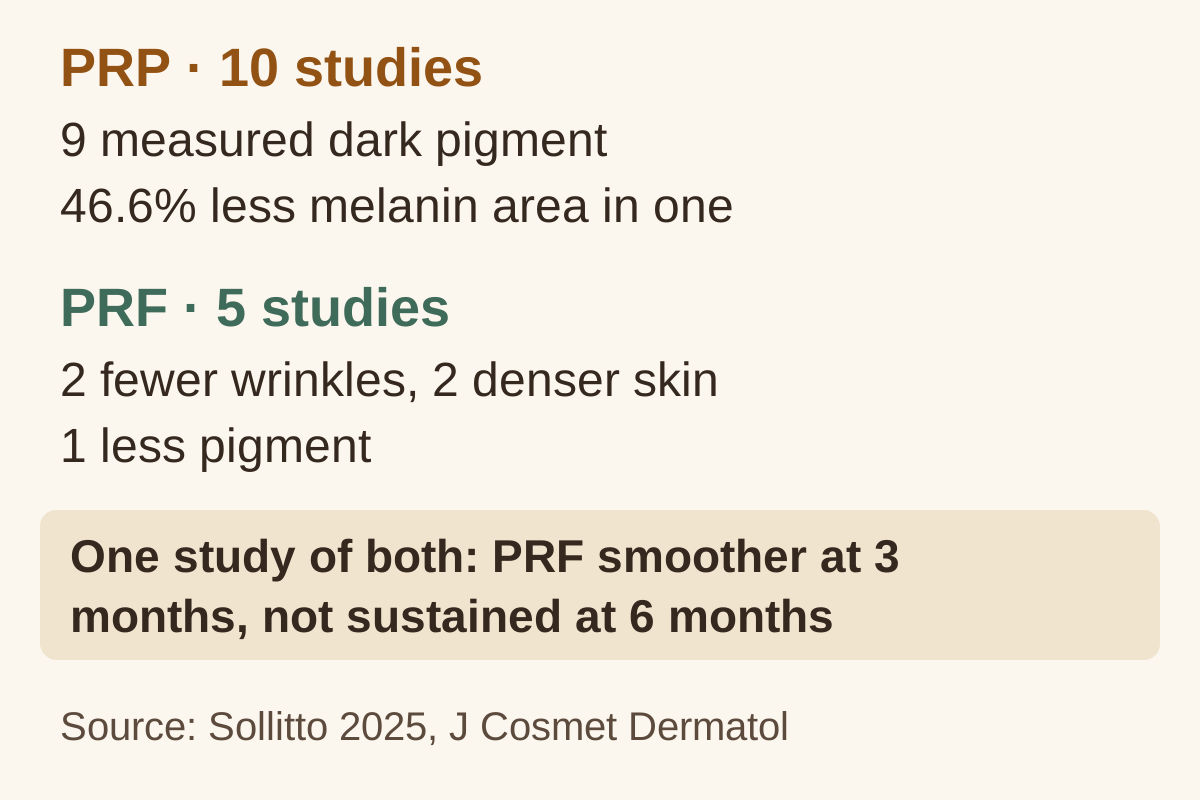
The one study that compared the two directly found that PRF gave better skin smoothness beside the eyes at three months; that advantage was not sustained at six months, and patients rated the two alike.[1] A 2026 systematic review of 26 studies, updating a 2021 review, reached a similar view: patients were highly satisfied, PRP and PRF were only moderately effective for under-eye pigment, and objective gains in wrinkles and texture were mixed. Preparation methods varied so much that firm conclusions were not possible.[3]
How long do PRP and PRF results last under the eyes?
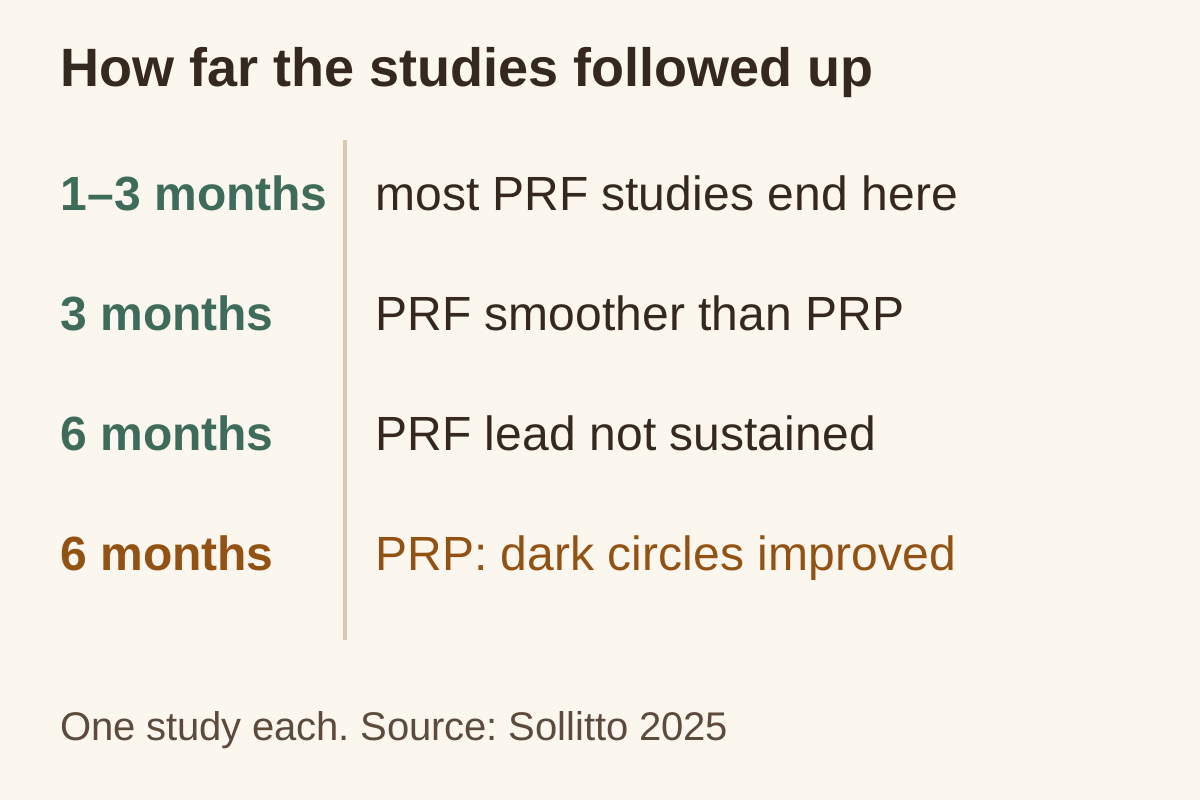
Few studies followed patients for long. Apart from the head-to-head study, the PRF studies reporting lasting results followed patients for one to three months at most. In the head-to-head study, the smoothness advantage of PRF at three months was not sustained at six months. In a PRP study, dark circles were still significantly improved six months after treatment.[1]
What is PRF gel?
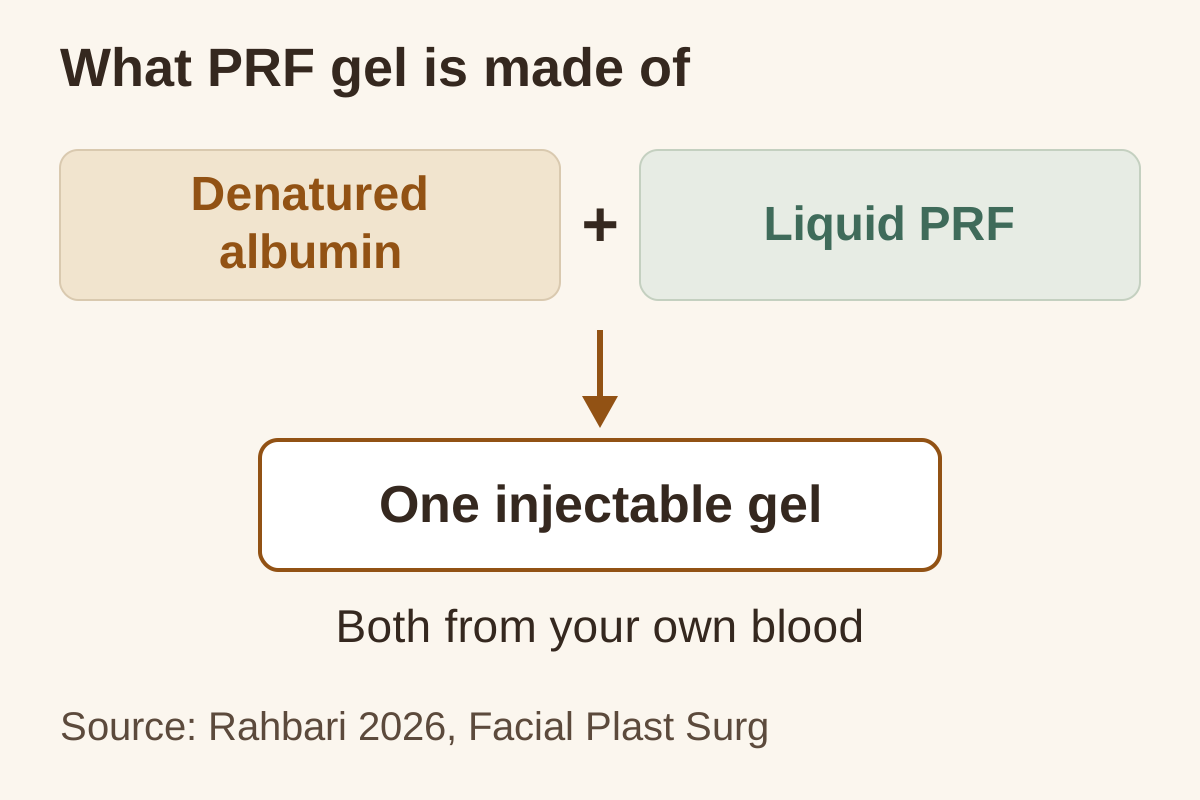
PRF gel is a gel-form preparation offered for under-eye hollowness. A 2026 technique report from one Los Angeles practice describes it as an autologous gel made by combining denatured albumin with liquid PRF, and presents it as an alternative to hyaluronic acid filler for people who want a conservative approach, have had complications from hyaluronic acid or have poor lymphatic drainage under the eyes. The authors report minimal downtime and, in their prospective observations, volume improving gradually over repeated treatments. One author is medical director of CosmoFrance, which makes and distributes PRF gel kits and systems.[4]
PRP, PRF or filler: which suits which concern?
- Dark pigment: PRP has the more consistent evidence, though a 2026 review rated PRP and PRF only moderately effective for it.[1][3]
- Fine lines and crepey texture: PRF studies have mainly examined these; in the one direct comparison, its smoothness advantage at three months was not sustained at six.[1]
- Hollowing from volume loss: fillers remain the foundation, and PRF gel is offered as an alternative.[2][4]
- Bulging fat pads or a lax lower eyelid: surgery is preferred.[2]
When hollowing is the main concern, the comparison that matters is PRF gel against hyaluronic acid filler for a hollow tear trough: one adds volume gradually in a single practice’s technique report, the other is what reviews treat as the foundation for volume loss.[4][2]
What are the side effects under the eyes?
Across the 14 studies, side effects were mild and passed within the treatment period: mostly swelling, redness and bruising. The head-to-head study found no difference between PRP and PRF in side effects or pain.[1] Rare but serious, a case series describes four people who lost vision permanently after PRP was injected into the face, so any change in vision after a face injection needs emergency care.[5] Other reactions and infection risks are covered in PRP side effects.
How long does PRP under the eyes last?
In one study, dark circles were still improved six months after PRP. Few studies followed patients longer.[1]
Is PRF better than PRP under the eyes?
Not overall. In the one direct comparison, PRF gave better skin smoothness beside the eyes at three months, but that advantage was not sustained at six months; a 2025 review found neither superior.[1]
What is PRF gel made of?
In a 2026 technique report, PRF gel is an autologous gel made by combining denatured albumin with liquid PRF.[4]